Product & enclosure design
Translate your product brief into a housing direction, with attention to appearance, use, internal layout and assembly.
Enclosure development for smart charging sockets, AC charging products and custom wall-mounted formats.
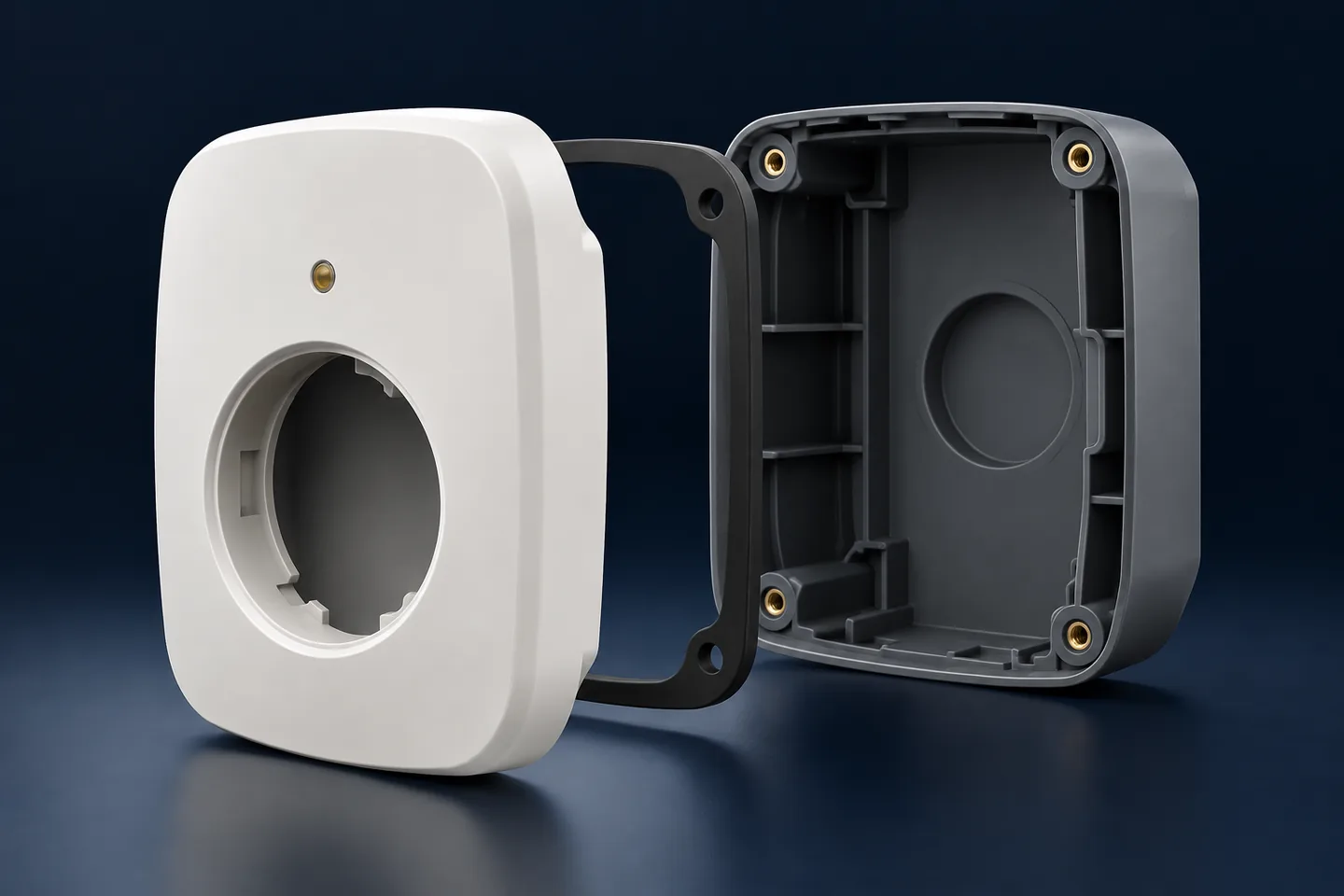
Your housing must accommodate the components inside and the conditions outside. We review the mechanical requirements with your team before defining the design and production scope.
Translate your product brief into a housing direction, with attention to appearance, use, internal layout and assembly.
Review wall sections, draft, ribs, bosses and parting lines before committing the design to tooling.
Plan prototypes and fit checks around the questions your team needs to resolve before production.
Define the mould requirements, sampling plan and approval checkpoints around the agreed enclosure design.
Review material, colour, texture and production quantities for repeatable supply against an approved sample.
Agree branding, secondary operations, inspection, packing and dispatch requirements for your project.
Send the application, dimensions or CAD, expected quantity and any required environmental performance. We will use these to establish the project scope.
Our scope covers the housing and agreed mechanical components. Electronics, circuitry and product functionality remain with your team.
Our focus is the plastic housing and agreed mechanical components. Your team retains responsibility for the electronics, circuitry, firmware and product functionality.
Yes. Share the intended use, component dimensions and design requirements. We can then review the development scope and the inputs needed to move forward.
Share your 3D CAD, dimensioned drawings and material requirements for review. Design readiness, tooling and production requirements are assessed before quotation.
Share the required performance and operating conditions. Material grade, sealing construction, assembly and testing requirements are agreed for the project. Ratings depend on validation of the applicable design and assembly.
Quantities, tooling cost and timelines depend on the design, material, mould complexity and production plan. These are quoted after reviewing your brief.
Raise your confidentiality requirements before sending sensitive files. NDA terms, design rights, tooling ownership and maintenance responsibilities can be agreed in the project documentation.
Tell us whether the charger is installed indoors, outdoors or under shelter. Include exposure to sunlight, rain, cleaning agents and expected operating temperatures.
Share the charging socket format, PCB envelope, cable diameters, connector locations and service access. Electrical safety clearances must be defined by your product engineering team.
Identify the intended market and required tests early. Ingress protection, impact resistance and material performance require validation of the complete agreed assembly.
Visuals on this page are AI-generated concept illustrations. They are not photographs of manufactured products, technical CAD drawings or evidence of certification.
Share your application, drawings and production objectives.